
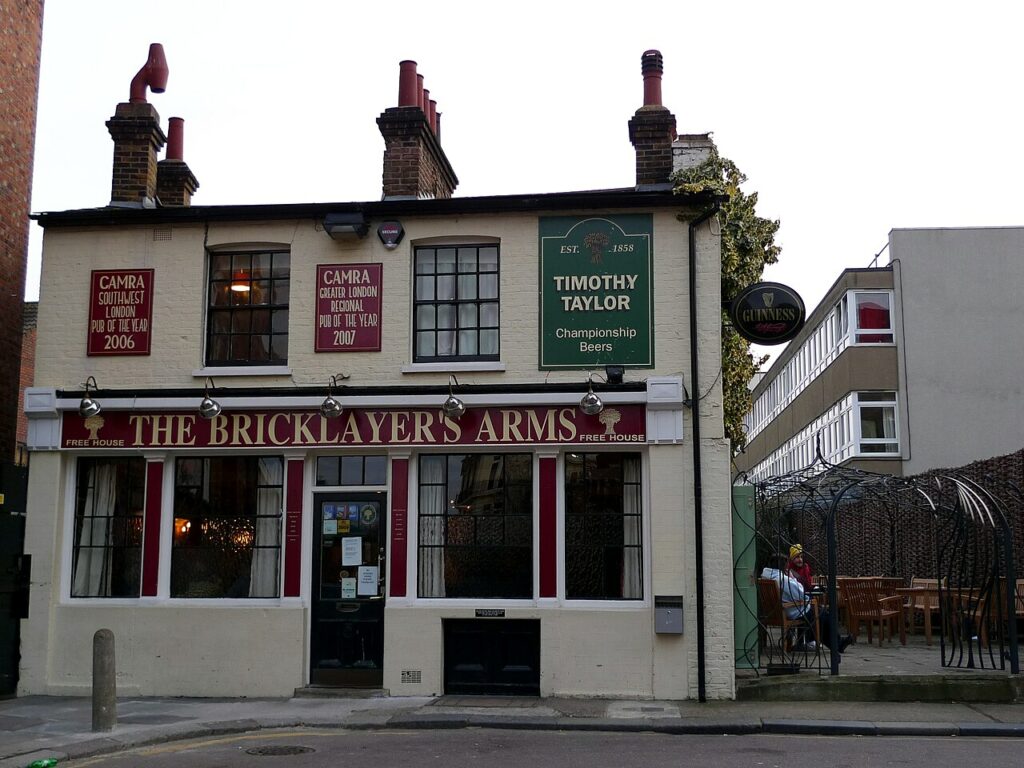
The Bricklayers Arms on Upper Richmond Road is Putney’s oldest pub, and this spring it became something else as well: a line on a spreadsheet. According to figures reported by Putney.news in January, its rateable value – the number the taxman uses to work out its business rates – has jumped from £15,500 to £40,500.
The only thing that moved was the valuation date.
Business rates bills for 2026/27 went out in March and took effect on 1 April. Pubs across London opened the envelopes to find themselves taxed on how well the trade was doing two years ago, in a spring when drinkers had finally come back after the pandemic. The government has spent the winter tinkering at the edges. Mind you, nobody has touched the actual problem, which is the way a pub gets valued in the first place.
Why is a pub in 2026 being taxed on April 2024?
Because that’s how the system is built. Every three years the Valuation Office Agency revalues every commercial property in England, and it fixes each value at a date two years before the new list begins. For the list that started this month, that date was 1 April 2024.
The previous list, which ran from 2023, used April 2021. Pubs were shut or trading under restrictions that spring, so their valuations came out low. The new ones capture a sector that had just rebuilt its takings. Put the two side by side and the jump looks enormous – which it is. The VOA’s own figures show rateable values for pubs and pub restaurants in England rose by an average of 30%. For pubs with rooms, the average rise was 70%. The figure for all properties across England was 19.4%.
What’s wrong with valuing a pub on its takings?
Most shops are valued on what they would fetch in rent. Pubs aren’t. The VOA estimates a pub’s sales – or rather, what a “reasonably efficient operator” could take there – and applies a percentage to reach a rental figure.
Alex Probyn of the property tax firm Altus Group put the flaw plainly in January: the method measures turnover, and turnover says nothing about profit. Between 2021 and 2024 a pub’s costs climbed on almost every line, from wages and employer’s national insurance to beer duty and energy. A landlord taking more money over the bar in 2024 could easily have been keeping less of it. The tax sees only the till.
How big is the damage on Upper Richmond Road?
Take the Bricklayers Arms, since the figures are public, and do the sums the rough way, before any of the caps and reliefs kick in.
Last year the pub’s £15,500 rateable value sat under the small business multiplier of 49.9p in the pound, which gives a bill of roughly £7,735. Pubs then got 40% knocked off under the retail, hospitality and leisure relief brought in after Covid, bringing it down to around £4,640. That relief was abolished on 31 March.
This year the government has created special lower multipliers for hospitality. A pub with a rateable value under £51,000 now pays 38.2p in the pound; between £51,000 and £499,999, it’s 43p. That sounds generous until you run the Bricklayers through it. At £40,500, a 38.2p multiplier produces a headline bill of about £15,470.
On paper, then, the bill has more than tripled.
The actual bill will be lower, for two reasons. A scheme called Supporting Small Businesses limits how fast a bill can rise each year after a revaluation, with a minimum cap of £800. And on 27 January, after weeks of pressure from the trade, the Treasury announced an extra 15% off for pubs and live music venues in 2026/27, with bills then frozen in real terms for the following two years.
So the Bricklayers won’t pay £15,470 this April. It will pay a smaller, rising figure that climbs towards that number over the life of the list, from a starting point built on a valuation that was never really about the pub it was measuring.
Does the 15% rescue anyone?
It rescues the Treasury’s headlines for a week or two.
The relief it replaced was at least simple: 40% off, capped at £110,000 per business, which meant the big chains hit the ceiling and the independents got the full whack of help. The new arrangement is a patchwork of multipliers, caps and a pub-specific discount, and an independent landlord in Hackney or Herne Hill now needs an accountant to tell her what she owes.
UKHospitality, the trade body, has warned that the average pub’s rates will be £4,500 higher than today’s in 2027/28, and £7,000 higher the year after. A 15% discount applied to a number that has doubled or tripled is still a very large number. The relief also sits on top of the capping scheme rather than replacing the valuation, so the underlying rateable value – £40,500 in Putney’s case – stays on the books until 2029 regardless.
It is the kind of fix you announce when you want to be seen doing something and would rather not do the thing itself.
Which London locals are most exposed?
Ben Guerrin built a website to answer that question, and gave it a name that can’t be printed in full on a family blog: ismypubfucked.com. Using VOA data, it compares each pub’s old and new rates and ranks 45,936 venues from fine to the far end of the scale.
Time Out picked out a handful of the London names near the top in January. The Spit and Sawdust in Southwark was on it, as was the Duke of Wellington in the City. So were the Nobody Inn at Newington Green and the Bell House in Marylebone. The Bricklayers Arms sat at 78th in London.
Number one in the capital, by Putney.news’s reading of the ranking, was the Spread Eagle on Wandsworth High Street, where the rateable value rose from £16,750 to £121,000. That’s a rise of 622%.
Not every closure this year belongs in this story, and it’s tempting to lump them together. The Orange Tree in Winchmore Hill shut in February when its long-serving landlords retired, and the Enfield Society now fears the building will go for housing. That’s a loss. It’s a retirement, too, and blaming it on rates would be the kind of sloppiness that lets the Treasury wave the whole argument away.
Does the Spread Eagle deserve our sympathy?
Not much, and this is where I part company with some of the campaigners.
The Spread Eagle was renovated in 2022 and reopened with 21 boutique hotel rooms. It is a different business from the one the old valuation measured – a pub with a hotel attached, and pubs with rooms saw an average rise of 70% across England anyway. A bigger building with bedrooms to let should pay more than a boozer with a dartboard. Putting it at the top of a list of victims muddies the case for the pubs that genuinely were hammered by a date on a calendar, like the Bricklayers.
Is banning Labour MPs from the bar going to help?
No.
Over the winter, publicans in several parts of the country put up signs telling Labour MPs they weren’t welcome. It made for good television and I understand the fury behind it. It also handed ministers an easy way to cast the whole row as a political stunt rather than a question about valuation methods, which is exactly the argument the trade needs to win.
Did London get any help of its own?
A sliver. City Hall’s business rate supplement – the extra 2p in the pound that helped pay for Crossrail – now only applies to properties with a rateable value above £92,000, up from £75,000. A few mid-sized pubs will escape it. For a small corner local that was always under the old threshold, it changes nothing at all.
What should replace the turnover sum?
Value pubs on profit, or at least on something that moves with costs as well as takings. Probyn’s criticism in January points the same way. The VOA publishes its method jointly with the pub trade at every revaluation, so the machinery for changing it already exists.
The standard objection is that profit is easier to fiddle than turnover, and that a pub owned by a big group can shuffle its costs to look poorer than it is. Fair enough. It is still a better starting point than a number that treats a pub pulling £10,000 a week at a loss the same as one pulling £10,000 at a healthy margin. Audit the big operators hard and give the independents a simple return. The VOA manages far more complicated things.
Until then, the list runs to 2029. The Bricklayers Arms keeps its £40,500 valuation for three years, calculated from a spring when the trade had only just found its feet again, and paid for by the landlords who have to stay open long enough to get to the next one.
